Walk into any office on a Monday morning and look down. That dull gray path running from the front door to the break room is telling your clients something you never agreed to say. At Kauffmans Carpet Cleaning, we’ve spent years watching Wyomissing businesses chase that problem the wrong way, and this guide pulls together everything we wish every owner knew before they picked up the phone.
Commercial carpet care isn’t the same animal as cleaning the rug in your living room. The foot traffic is heavier, the soil is different, and the stakes are higher because customers and employees judge a space the second they step inside. So let’s get into what actually works, what’s a waste of money, and how to think about this like the long-term investment it is.
Why Commercial Carpet Cleaning Matters More Than People Think
Carpet is usually the largest single surface in a commercial building, and it acts like a giant filter. Dust, pollen, food particles, and the grit tracked in off Wyomissing parking lots all settle down into the fibers and stay there until something pulls them out.
Here’s the part that surprises owners. The dirt you can see on the surface isn’t the dirt doing the damage. It’s the dry, gritty soil deep in the pile that grinds against the carpet fibers every time someone walks across it, slowly cutting them apart like tiny blades. That’s why a neglected carpet looks worn out years before it should.
There’s a financial angle too. Commercial carpet is expensive to replace, and a consistent cleaning program can stretch its usable life dramatically. The carpet industry has long pointed to regular professional maintenance as one of the biggest factors in how long a floor survives, and our own field experience backs that up completely. We’ve serviced offices where ten-year-old carpet still looked respectable simply because someone committed to a schedule early.
The Hidden Cost of “Looking Fine”
The trap most businesses fall into is waiting until the carpet looks dirty. By then, the damage is already baked in.
Think of it like changing the oil in a delivery van. You don’t wait for the engine to start knocking. You stay ahead of the wear because catching it late costs ten times more. Commercial Carpet Cleaning Services in Wyomissing, PA behaves the same way, and the businesses that understand this spend far less over a decade than the ones cleaning reactively.
First Impressions Are Quietly Expensive
A client sitting in your waiting room notices the floor whether they realize it or not. A clean, fresh space signals competence, while a tired carpet plants a small seed of doubt before you’ve said a word.
For medical offices, law firms, and showrooms around Wyomissing, that impression carries real weight. You spend money on signage, lighting, and furniture to look professional. Letting the floor undercut all of it makes no sense.
The Main Methods Commercial Carpet Cleaners Actually Use
Not every job calls for the same approach, and any honest provider will tell you that. The right method depends on your carpet type, your traffic levels, and how quickly you need the space back in use.
Hot Water Extraction (The Deep Clean Workhorse)
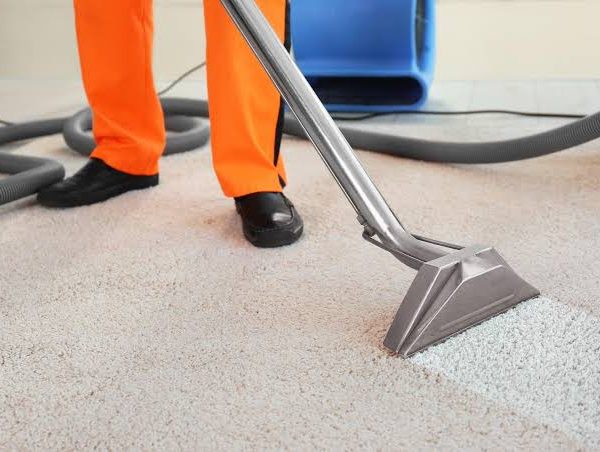
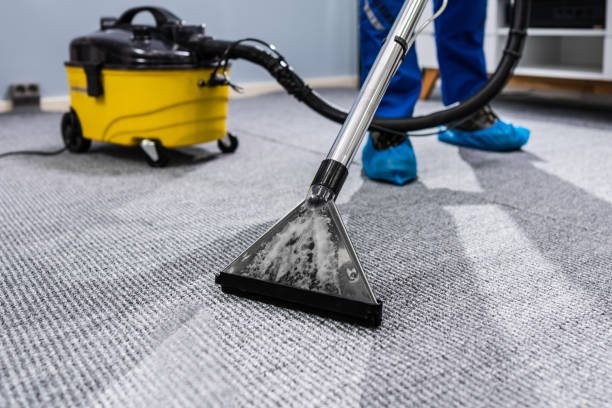
Most people call this steam cleaning, though that name isn’t quite accurate. Hot water extraction injects a heated cleaning solution deep into the carpet under pressure, then immediately vacuums it back out along with the suspended soil.
This is the method we lean on for a true deep clean, and it’s the one most carpet manufacturers specify to keep warranties valid. The catch is dry time. Depending on airflow and humidity, the carpet may need several hours to fully dry, which is why we often schedule these jobs for evenings or weekends.
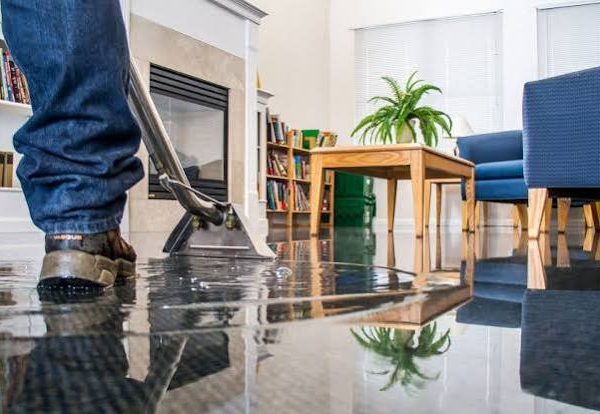
When it’s done right, hot water extraction pulls out the embedded grit that surface cleaning leaves behind. When it’s done poorly, with too much solution and not enough extraction, you get carpet that stays wet too long and re-soils fast. The difference comes down entirely to the technician’s skill and the strength of the equipment.
Encapsulation and Low-Moisture Cleaning
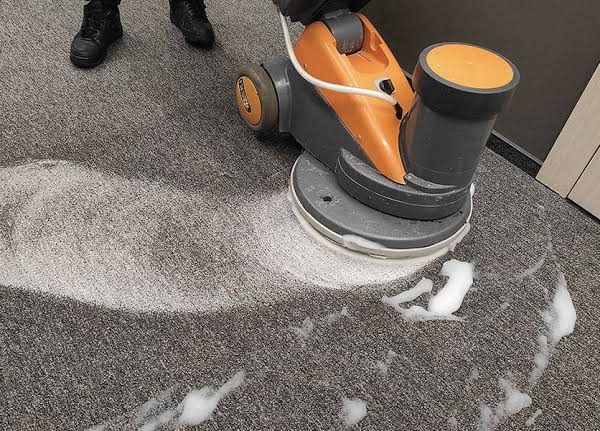
Encapsulation is the low-moisture method built for busy commercial spaces that can’t afford long dry times. A specialized solution crystallizes around each soil particle, and then a regular vacuum lifts the dried crystals away over the following day or two.
The big advantage is speed. The carpet is usually walkable within an hour, which is a lifesaver for offices that run seven days a week or retail floors that never really close.
We treat encapsulation as part of an interim maintenance routine rather than a full replacement for extraction. It keeps traffic lanes looking sharp between deeper cleanings, and that combination, frequent light cleaning plus periodic deep cleaning, is the framework that keeps commercial carpet looking consistent year-round.
Spot Treatment and Traffic Lane Restoration
Some areas take a beating while the rest of the floor stays fine. Entryways, hallways, and the strip in front of every desk show wear long before the corners do.
Targeted traffic lane treatment focuses cleaning power exactly where the soil concentrates. Pair that with prompt spot removal for spills, and you avoid the situation where one ugly stain forces an early full-floor cleaning. The trick is acting fast, because a coffee spill treated within a day is far easier to remove than one that’s set for a week.
How Often Should Wyomissing Businesses Clean Their Carpets
There’s no single answer, and anyone who gives you one without asking about your space is guessing. The right frequency comes down to traffic, the type of business, and the local conditions your building deals with.
A quiet professional office with light foot traffic might do well with a deep clean two to four times a year, supported by regular vacuuming in between. A busy restaurant, gym, or medical practice often needs monthly attention on high-traffic zones plus more frequent deep cleaning.
Pennsylvania weather plays a real role here too. Our wet springs and salty, slushy winters mean Wyomissing entryways take on far more grime than a building in a dry climate would. We routinely recommend tightening the cleaning schedule through winter, when road salt and moisture get tracked in constantly and can actually damage fibers if they sit.
Building a Maintenance Schedule That Fits
The smartest move is trusted carpet cleaning services care as a planned program, not a series of emergencies. We sit down with clients and map a calendar around their actual traffic patterns instead of arbitrary dates.
A typical program blends daily vacuuming by your own staff, periodic interim cleaning on the busy lanes, and scheduled deep extraction a few times a year. That layered approach is the industry-standard way to keep appearance steady and protect the carpet investment over its full life.
Choosing the Right Commercial Carpet Cleaning Company
This is where a lot of businesses get burned, usually by chasing the cheapest quote. A bargain price often means a rushed job, weak equipment, or a crew leaving your carpet soaked and re-soiling within weeks.
Certifications and Real Expertise
The credential that matters most in this trade is IICRC certification, issued by the Institute of Inspection Cleaning and Restoration Certification. It’s the recognized standard for proper technique, and it tells you a company has trained on fiber types, soil chemistry, and the right methods rather than just buying a machine and printing business cards.
Ask whether the technicians understand the difference between nylon and olefin carpet, because the cleaning approach genuinely changes between them. A provider who can explain that confidently is one who actually knows the craft.
Equipment, Insurance, and Local Reputation
Commercial work demands commercial-grade machines. Truck-mounted or high-capacity portable units generate the water temperature and extraction power that a rental-store unit simply can’t match, and that power is the whole reason a deep clean works.
Confirm the company carries proper liability insurance before anyone sets foot in your building. And lean on local reputation, since a company rooted in Berks County has its name to protect and tends to show up the way it promised. We’ve built Kauffmans Carpet Cleaning on exactly that kind of word-of-mouth trust across Wyomissing and Reading.
Questions Worth Asking Before You Hire
A short conversation tells you a lot. Ask how they handle dry time, what method they’d use on your specific carpet, and whether they guarantee their work.
You’re also listening for honesty. A provider who admits that certain old stains may not fully lift is being straight with you, while one who promises miracles is usually setting up a disappointment. Realistic expectations are a sign of experience, not weakness.
What Affects the Cost of Commercial Carpet Cleaning
Pricing in this industry varies because the jobs vary so much, but a few factors drive almost every quote you’ll receive. Square footage is the obvious one, though it’s rarely the whole story.
The condition of the carpet matters enormously. A floor on a steady maintenance plan cleans quickly and cheaply, while one that’s been neglected for years takes more passes, stronger treatment, and more labor. This is another reason staying ahead of the problem saves money, since prevention always costs less than restoration.
Carpet type, the cleaning method required, accessibility around furniture, and how urgently you need the space back all factor in as well. A reputable company will walk your space, ask about your goals, and give you a clear quote rather than a vague phone estimate. If a price sounds suspiciously low, it usually is, and the gap tends to show up as cut corners.
Conclusion
Commercial carpet cleaning isn’t a luxury or an afterthought. It’s basic maintenance that protects an expensive asset, keeps your space looking credible, and supports a healthier environment for everyone who walks through your doors.
The businesses that get this right treat it as an ongoing program built around their real traffic, lean on certified professionals carpet cleaning services with proper equipment, and act before the carpet looks tired rather than after. If you run a business in Wyomissing and you’ve been putting this off, the best time to start a real maintenance plan is now, while your carpet still has plenty of life left to protect. Reach out to a trusted local provider, walk your space together, and build a schedule that fits how you actually use the place.
Frequently Asked Questions
How long does commercial carpet take to dry after cleaning?
With hot water extraction, expect roughly four to eight hours depending on airflow and humidity, which is why evening or weekend jobs are common. Low-moisture encapsulation usually leaves carpet walkable within about an hour.
Is professional cleaning really better than renting a machine?
Yes, by a wide margin for commercial spaces. Rental units lack the water temperature and extraction power to pull deep soil out, and weak extraction often leaves carpet wet enough to re-soil quickly.
How often should a busy office clean its carpets?
Most active offices benefit from deep cleaning two to four times a year, with interim cleaning on high-traffic lanes in between. Restaurants, gyms, and medical offices typically need more frequent attention.
Can old or set-in stains always be removed?
Not always, and an honest provider will tell you so upfront. Fresh spills treated quickly come out far more reliably than stains that have been sitting and have already bonded with the fiber.
Why does carpet get dirty again so fast after a cheap cleaning?
Usually because too much detergent was left behind or the carpet stayed wet too long. Leftover residue acts like a magnet for new soil, so proper rinsing and extraction are essential.
Does carpet cleaning improve indoor air quality?
It can help noticeably. Carpet traps dust, allergens, and particles, and removing that buildup through proper cleaning reduces what gets stirred back into the air.
What should I look for in a Wyomissing carpet cleaning company?
Prioritize IICRC certification, commercial-grade equipment, proper insurance, and a strong local reputation. A provider who walks your space and explains their method is far more trustworthy than one quoting blind over the phone.