There’s a moment when most Reading homeowners recognize you move a piece of furniture that’s been in the same spot for two years, and what you find underneath changes your afternoon plans entirely. A dark, spreading stain. Fibers matted flat. A smell that wasn’t there before, or maybe it was and you’d just stopped noticing. It’s not a dramatic emergency, but it’s the kind of thing that quietly escalates into a real problem if you keep putting it off.
Carpet Cleaning in Reading, PA homes doesn’t announce itself loudly. It compounds. Dirt ground into fibers acts like sandpaper with every footstep. Moisture trapped beneath the surface especially during Reading’s humid summers or after a wet winter tracked in from the sidewalk creates conditions where mold and bacteria thrive long before you’d ever see or smell them. By the time the problem becomes obvious, the cost to fix it has already climbed past what a routine cleaning would have run six months ago.
That’s the gap Kauffmans Carpet Cleaning has been filling for families across Reading, PA and the surrounding Berks County area. Not just cleaning carpets, but protecting the investment that sits under your feet every single day.
What Reading’s Climate Actually Does to Your Carpets Year-Round
Berks County residents deal with a climate that doesn’t do anyone’s flooring any favors. Winters bring road salt and slushy boots through the front door. Spring thaw loosens soil across the region’s older neighborhoods, and that soil ends up embedded in entryway and hallway carpets before May even arrives. Summer humidity especially in older homes without modern vapor barriers — pushes moisture upward from concrete subfloors into carpet backing. And fall leaf season? Anyone with kids or pets knows what that looks like by November.
These aren’t abstract concerns. The combination of freeze-thaw cycles, humidity fluctuation, and heavy seasonal foot traffic creates a pattern of accelerated carpet wear that’s unique to homes in this part of Pennsylvania. Carpets in Reading age faster than their warranties suggest when they’re not maintained on a schedule that matches local conditions.
Professional cleaners who understand the regional environment can adjust their methods accordingly — water temperatures, drying times, fiber-specific treatments — in ways that generic, national chains simply don’t prioritize. Local expertise matters here more than most homeowners realize until they’ve dealt with a poorly done cleaning job that left backing damp for three days.
The Hidden Costs of Waiting Too Long
Here’s the part of the carpet cleaning conversation that rarely comes up in advertising but makes all the difference in a homeowner’s budget: the longer you wait, the more you pay — and eventually, you stop paying for cleaning and start paying for replacement.
Carpet replacement in an average Reading, PA home runs anywhere from $3,000 to $8,000 depending on square footage, materials, and subfloor condition. Professional carpet cleaning, by comparison, is a fraction of that — and when done consistently, it can extend the useful life of your carpet by years. The EPA has noted that indoor air quality is directly affected by the condition of soft flooring materials, and carpets that aren’t regularly cleaned accumulate allergens, dust mites, and pollutants at rates that impact the health of everyone living in the home.
Beyond air quality, there’s the structural concern. Carpet backing degrades when it stays damp or carries embedded particulate matter for extended periods. Once the backing goes, the carpet cannot be saved — only replaced. A stain that looks like a surface problem is often an early warning sign of deeper saturation, and treating it early with professional equipment is almost always the more affordable path.
Kauffmans Carpet Cleaning works with Reading families on exactly this kind of cost-benefit thinking — helping homeowners understand when a cleaning intervention makes financial sense versus when it doesn’t, and giving honest assessments rather than upselling services that aren’t needed.
Why Professional Equipment Outperforms Every Rental Machine on the Market
This comes up constantly: “Can’t I just rent one of those machines from the grocery store?” The honest answer is yes, and the results will be honest too — limited, surface-level, and occasionally damaging if you don’t know what you’re doing with fiber types or water extraction rates.
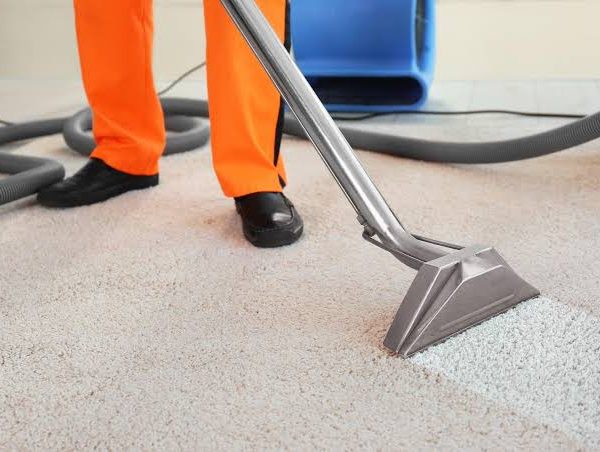
Consumer-grade carpet cleaning machines work on a simple principle: spray, scrub, extract. Professional hot water extraction equipment operates at significantly higher temperatures, with greater suction capacity and more precise control over moisture levels. The practical difference is that professional carpet cleaning reaches deeper into the carpet pile, extracts more of what’s actually in there, and leaves carpet drier — reducing the window of time where mold and bacteria can take hold after a cleaning.
There’s also the chemistry involved. Professional-grade solutions are pH-balanced for specific fiber types and designed to rinse out completely. Some grocery store rental products leave residue that actually attracts dirt faster, meaning your carpets look dirty again within weeks of cleaning them. It’s a frustrating cycle that a lot of Reading homeowners have experienced before switching to a trusted local professional.
For wool carpets, natural fiber area rugs, or anything with delicate construction, the stakes are even higher. The wrong temperature or agitation level can cause irreversible shrinkage or dye bleeding. Knowing the difference between a nylon Berber and a wool-blend requires training, not guesswork.
Stain Types That Are More Serious Than They Look
Not all stains are created equal, and some of the most damaging ones are the ones homeowners tend to underestimate.
Pet urine is the least visible part of the problem. Urine penetrates through carpet pile, through backing, and into the pad beneath — and sometimes into the subfloor itself. Odor-neutralizing treatments need to reach every layer the liquid reached, or the smell returns with humidity changes. This is particularly common in Reading homes during warm months when indoor humidity rises.
Red wine and berry-based stains contain tannins that bond chemically with carpet fibers over time. The longer they sit, the deeper they set. A stain that looks like it’s dried and contained is often still migrating through the fiber structure.
Grease and oil-based stains require specific degreasing agents and agitation methods. Water alone — even hot water — won’t fully emulsify oil. Amateur attempts often spread the stain laterally while appearing to reduce it.
Coffee and tea carry tannin content, plus the heat of the liquid when it was spilled accelerates fiber penetration. A year-old coffee stain in a high-traffic area has often bonded so thoroughly that full removal isn’t possible without professional enzyme treatment.
Mold and mildew spots in Berks County homes with basement carpeting or ground-floor rooms that experience humidity represent a genuine health concern — not just a cosmetic one. The CDC classifies mold exposure as a significant indoor air quality risk, and carpets can harbor growth that’s invisible until it’s already substantial.
What a Real Carpet Cleaning Process Should Include
If you’ve ever had carpets cleaned and felt like the results didn’t justify the price, it’s worth understanding what a thorough professional process actually involves — because not every company does all of these steps.
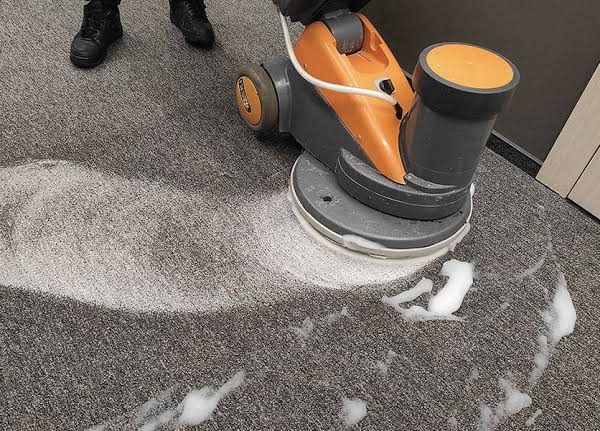
A complete cleaning should begin with a dry vacuuming pass using a commercial-grade vacuum to remove loose particulate matter before any moisture is introduced. Pre-treatment of high-traffic areas and known stains with appropriate chemistry comes next, followed by a dwell period that allows the solution to break down soils at the fiber level. Hot water extraction then flushes the loosened material out while simultaneously extracting moisture. Post-treatment for specific stains — enzyme treatments for organics, tannin neutralizers for beverage stains — follows when needed. Grooming the carpet pile in a consistent direction speeds drying and improves the finished appearance. And finally, a drying assessment ensures the carpet isn’t being left in conditions where mold risk is elevated.
Kauffmans Carpet Cleaning follows a process-driven approach to every job in Reading and throughout Berks County — because the consistency of the process is what produces consistent results, not just the equipment.
Carpet Maintenance Between Professional Cleanings
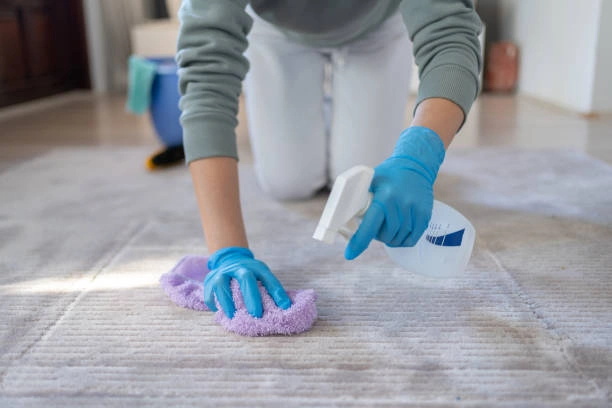
Professional cleaning is the foundation, but what happens between visits matters nearly as much. Vacuuming high-traffic areas at least twice weekly using a quality upright or canister vacuum with a HEPA filter removes the particulate that causes fiber abrasion before it gets worked in deeper. Addressing liquid spills immediately by blotting — never rubbing — with a clean white cloth lifts the liquid upward and out rather than spreading it or driving it deeper into the pile.
Using walk-off mats at every exterior entry point, especially during Reading’s wet spring season and winter months, catches a significant percentage of the soil and moisture that would otherwise end up in your carpet. Keeping indoor humidity below 50% during summer months reduces the risk of mold growth in carpet padding, particularly in below-grade rooms. Rearranging furniture periodically prevents permanent matting patterns from forming in heavily loaded areas.
These aren’t complicated habits, but the homeowners who follow them consistently get noticeably more life out of their carpets and spend less on cleaning overall because the baseline cleanliness is maintained between visits.
Serving Reading, PA and Berks County Communities
Kauffmans Carpet Cleaning serves homeowners and businesses throughout the Reading area, including communities in Wyomissing, Shillington, Exeter Township, Spring Township, Muhlenberg Township, and surrounding Berks County neighborhoods. The company’s familiarity with local housing stock — including the older row homes and mid-century construction common throughout the region — informs how they approach each job, from subfloor moisture considerations to the fiber types common in homes built across different eras.
Whether it’s a Victorian-era home in the historic districts near downtown Reading or a newer construction in one of Berks County’s suburban developments, the approach is calibrated to the actual conditions in that home, not a one-size script.
Making the Decision Before It’s an Emergency
The homeowners who get the most value from professional carpet cleaning are rarely the ones calling after a disaster. They’re the ones who scheduled a cleaning before the holidays because they knew family was coming. Or the ones who noticed a small area of discoloration and addressed it before it spread. Or the families with young children and pets who understand that the carpet in their home is working hard every day and needs maintenance to perform well and last long.
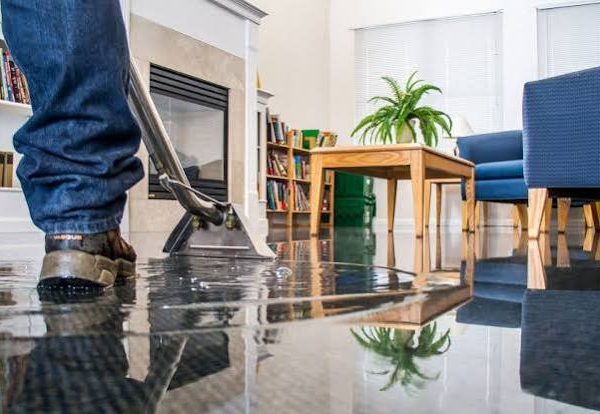
Emergency carpet cleaning — after a flood, a major spill, or a pet situation that’s been building unaddressed — is a much harder, more expensive, and less predictable service than routine professional maintenance. The outcomes are less certain, the costs are higher, and the stress is real.
Choosing to act before a situation becomes urgent is both a financial decision and a quality-of-life one. Carpet cleaning in Reading, PA is most valuable — and most affordable — when it’s planned, not panicked.
The Kauffmans Difference: Local Trust, Real Results
What makes a carpet cleaning company worth recommending to a neighbor isn’t just the equipment or the pricing — it’s the combination of technical knowledge, honest communication, and consistent follow-through that builds a reputation over time. In a community like Reading, where word-of-mouth still carries real weight, that reputation is built one home at a time.
Kauffmans Carpet Cleaning has built its standing in Berks County on exactly that foundation: showing up prepared, communicating clearly about what’s possible, doing the work thoroughly, and leaving the home better than they found it. Not overpromising. Not cutting corners when no one’s watching. Just doing the job right.
That’s what trusted, professional carpet cleaning looks like — and it’s why homeowners across Reading continue to call before the stains have a chance to cost them more.
Conclusion
At the end of the day, your carpet is more than just a floor covering — it’s the surface your children play on, the space where your family gathers, and a significant part of what makes your home feel clean and comfortable. Treating it as an afterthought until something goes visibly wrong is a pattern that costs Reading homeowners far more in the long run than consistent, professional care ever would. The value of working with a dependable, experienced local company like Kauffmans Carpet Cleaning isn’t just in the cleaning itself — it’s in the peace of mind that comes from knowing someone who understands your home, your climate, and your specific situation is handling the job with skill and integrity. Don’t wait for the next spill, the next season, or the next move to finally deal with what’s been building underfoot. Call Kauffmans Carpet Cleaning today, and give your home the care it deserves before the cost of waiting becomes a number you didn’t budget for.
Frequently Asked Questions
How often should carpets in a Reading, PA home be professionally cleaned?
For most households, once every 12 to 18 months is a reasonable baseline — but that changes based on your specific situation. Homes with pets, young children, or allergy sufferers benefit from cleaning every 6 to 12 months. High-traffic areas like hallways and living rooms accumulate soil faster than bedrooms, and Berks County’s seasonal conditions — particularly wet winters and humid summers — accelerate the need for maintenance in homes that see a lot of foot traffic.
Can professional cleaning actually remove old, set-in stains?
Many set-in stains respond well to professional treatment, but the honest answer is: it depends on what the stain is, how long it’s been there, and what was done to it in the meantime. Pet urine that’s had time to penetrate into the pad is harder to fully eliminate than a coffee stain that was blotted immediately. A professional assessment gives you a realistic expectation before the work begins — which is always more useful than a blanket guarantee that every stain will come out perfectly.
Is professional carpet cleaning safe for homes with children and pets?
Yes, when done by an experienced company using appropriate products. Quality professional cleaning uses solutions that are designed to rinse out completely, leaving no residue that would be harmful to kids or animals. After cleaning, carpets should be allowed to dry fully before pets or children are back on them — typically four to six hours depending on ventilation and humidity conditions in the home.
What’s the difference between steam cleaning and hot water extraction?
These terms are often used interchangeably, but there’s a distinction worth knowing. True steam cleaning uses dry steam at very high temperatures and is sometimes used on hard surfaces. Hot water extraction — which is the professional standard for carpets — uses heated water mixed with cleaning solution that’s injected into the carpet pile and immediately extracted. It’s more effective for deep cleaning carpet fibers and is the method recommended by most carpet manufacturers for maintaining warranty compliance.
My carpet dried stiff after the last cleaning. What went wrong?
Stiffness after cleaning usually indicates one of two things: either a cleaning product wasn’t fully rinsed out and left a residue in the fibers, or the carpet was over-wetted and the backing absorbed more moisture than it could release evenly during drying. Both are avoidable with proper equipment and technique. If this has happened to you before, it’s a sign that the previous service didn’t use high-efficiency extraction. Professional-grade equipment removes significantly more moisture during the process, which is why carpets cleaned by experienced companies dry faster and feel softer.
Does furniture need to be moved before carpet cleaning?
For a thorough cleaning, yes at least the larger pieces that sit on the most-used areas. Many professional services, including Kauffmans Carpet Cleaning, will move lighter furniture as part of the service and place protective tabs under legs to prevent rust transfer or staining during the drying period. Heavier items like pianos, large entertainment centers, or bedroom sets are typically left in place, and the surrounding areas are cleaned thoroughly. It’s worth discussing logistics when you schedule so everything goes smoothly on the day of service.