
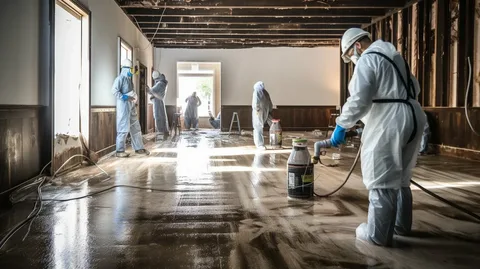
Water doesn’t wait for a convenient time. It shows up at 2 a.m. after a pipe bursts, or it creeps in slowly after a Berks County thunderstorm overwhelms your sump pump — and by the time you notice, it’s already soaking into places you can’t see.
At Kauffmans Carpet Cleaning, we’ve walked into more flooded basements and saturated living rooms across Robesonia than most homeowners will ever see in a lifetime, and the pattern is almost always the same: the people who act fast keep their floors, and the people who wait end up replacing them. This guide breaks down what professional water extraction really involves, why timing changes everything, and how to know when a wet-vac just won’t cut it.
Why Fast Water Extraction Matters More Than People Think
Most folks underestimate water. It looks passive sitting on a tile floor, almost harmless. But water is patient and relentless — it wicks upward into drywall, slides under baseboards, and settles into the subfloor where you’d never think to look. Every hour it sits, the damage compounds quietly.
That’s the part homeowners rarely grasp until it’s too late. The puddle you can see is maybe twenty percent of the problem. The rest is hiding.
The Critical 24 to 48 Hour Window
Here’s the number that should stick with you: mold can begin growing within 24 to 48 hours of water exposure, a timeline backed by the EPA and echoed across the restoration industry. That’s not a worst-case estimate — that’s a typical Tuesday for untreated water damage in a humid Pennsylvania summer.
Once mold takes hold, the conversation shifts. You’re no longer talking about drying a room; you’re talking about remediation, removal, and air-quality testing. The cost climbs, and so does the disruption to your home.
This is exactly why emergency water removal isn’t a luxury service. Acting within that first day or two is the single biggest factor that determines whether your carpet, drywall, and hardwood survive. Speed isn’t about convenience. It’s about damage control.
The Hidden Damage Behind Walls and Under Floors
A trained technician doesn’t trust their eyes alone, and neither should you. Water travels along the path of least resistance, which means it often pools in spots that look completely dry on the surface.
We’ve pulled up “dry” carpet in Robesonia homes only to find the padding underneath holding water like a sponge. We’ve scanned walls that felt fine to the touch and found saturation climbing two feet up the drywall. Without moisture meters and thermal imaging, that water stays trapped, feeding mold and rotting framing for weeks.
This is the difference between mopping up and actually fixing the problem. Surface drying gives you a false sense of relief while the real trouble brews out of sight.
How Professional Water Extraction Works in Robesonia
People often picture Water Extraction Services in Robesonia, PA as a guy with a giant vacuum. There’s truth to that — but the real work is methodical, and it follows industry standards that exist for good reason. The IICRC’s S500 standard is the backbone of legitimate water damage restoration, and any company worth hiring builds its process around it.
Let me walk you through what a proper job actually looks like, start to finish.
Inspection and Water Category Assessment
Before anyone touches a piece of equipment, the first step is figuring out what kind of water you’re dealing with. This matters enormously, because the cleanup approach changes completely depending on the contamination level.
The industry sorts water into three categories. Category 1 is clean water from a supply line or a leaky faucet. Category 2, sometimes called gray water, carries some contamination — think dishwasher overflow or a washing machine discharge. Category 3 is the nasty one: black water from sewage backups or flooding that’s traveled across the ground, loaded with bacteria and other hazards.
A reputable technician identifies the category, maps the affected area with moisture detection tools, and documents everything. That documentation isn’t busywork — it’s what your insurance company will want to see when you file a claim.
Extraction, Structural Drying, and Dehumidification
Once the assessment is done, the heavy lifting begins. Powerful truck-mounted or portable extraction units pull standing water out fast, and on saturated carpet, specialized tools lift moisture out of the padding rather than just skimming the top.
But removing the visible water is only the beginning. The air and the materials themselves are still holding moisture, and that’s where structural drying comes in.
The Drying Process, Step by Step
A well-run drying operation usually unfolds like this:
- Extraction of standing water using high-capacity pumps and vacuums until the surface is no longer wet to the touch.
- Strategic placement of air movers that create rapid airflow across wet surfaces, speeding up evaporation from carpet, walls, and flooring.
- Commercial dehumidification to capture that evaporated moisture from the air before it resettles into dry materials — a principle rooted in psychrometry, the science of how air and water vapor interact.
- Daily monitoring with moisture meters to track progress, because guessing when something is “dry enough” is how callbacks and mold problems happen.
This is genuinely where experience separates the pros from the pretenders. Anyone can point a fan at a wet floor. Knowing how many air movers a room needs, where to place the dehumidifier, and when the materials have truly returned to their normal moisture content — that takes training and a lot of jobs under your belt.
Common Causes of Water Damage in Robesonia Homes
Understanding why water shows up helps you prevent it next time. In Western Berks County, the causes tend to fall into a few familiar buckets, and the local landscape plays a real role.
Storms, Seasonal Flooding, and Groundwater
Robesonia sits in a part of Pennsylvania that gets its fair share of heavy rain, and the rolling terrain around the Tulpehocken watershed means water has plenty of opportunity to find its way toward basements. When the ground is already saturated from a wet spring, even a moderate storm can push groundwater through foundation cracks or overwhelm a sump pump.
Older homes in the area are especially vulnerable. A foundation that’s held up fine for decades can still let water seep in once hydrostatic pressure builds outside the walls. We see a surge of these calls every time a major system rolls through the region.
Plumbing Failures and Appliance Leaks
Not every flood comes from the sky. A surprising share of the water damage we handle starts inside the house — a burst supply line behind a washing machine, a failed water heater, a slow leak under a kitchen sink that finally gives way.
These indoor failures are sneaky because they often start small. A pinhole leak in a pipe can run for days behind a wall before anyone notices the warped baseboard or the musty smell. By then, the moisture has spread well beyond the original source.
The lesson here is simple: pay attention to small signs. A faint smell, a soft spot in the floor, a water stain that wasn’t there last week — these are your early warnings, and catching them early saves you a fortune.
How to Choose the Right Water Extraction Company
Not all restoration outfits are created equal, and the gap between a great one and a sloppy one is wider than most homeowners realize. When you’re standing in an inch of water, you don’t have time to vet five companies — so it helps to know what matters before disaster strikes.
Certifications and Equipment That Actually Matter
The single best signal of a trustworthy company is IICRC certification. The Institute of Inspection, Cleaning and Restoration Certification sets the training standards for the entire industry, and technicians who hold it have proven they understand the science behind proper drying — not just the mechanics.
Equipment tells a story too. A company that shows up with commercial-grade extractors, multiple air movers, and real dehumidifiers is set up to dry your home correctly. One that arrives with a shop vac and a box fan from the hardware store is going to leave moisture behind, and you’ll be the one paying for that mistake down the road.
Ask about their tools. Ask about their training. A good company will be happy to explain both.
Response Time, Documentation, and Insurance Support
When water is actively damaging your home, response time is everything. The companies that pick up the phone at midnight and arrive within the hour are the ones who’ll save your flooring. Slow response is itself a form of damage.
Documentation is the other piece people overlook until claim time. A professional crew photographs the damage, logs moisture readings, and records the scope of work — all of which becomes ammunition when you’re dealing with your insurer. Strong documentation can be the difference between a smooth claim and a frustrating fight over coverage.
DIY Water Removal Versus Calling a Professional
I’ll be honest with you, because pretending every spill needs a crew would be dishonest. In some water situations you can absolutely handle yourself, and you shouldn’t waste money when you don’t have to.
When Handling It Yourself Makes Sense
If a glass of water tips over, or a small clean-water leak gets caught within minutes, grab your towels and a fan and you’re fine. Category 1 water, a small footprint, and a quick response — that’s a DIY situation all day long.
The key conditions are that the water is clean, the area is small, and you caught it immediately. Hit all three and you’ve got this. Open the windows, run a fan, keep an eye on the spot for a day, and you’ll likely be okay.
When You Genuinely Need a Pro
The calculus changes fast once the affordable water extraction service spreads, sits overnight, or comes from a contaminated source. Saturated carpet, water behind walls, anything involving sewage, and any flood that’s been sitting more than a few hours — those all call for professional water extraction.
A short case study makes the point. A Robesonia homeowner once called us three days after a basement seepage event, convinced he’d handled it with a wet-vac and a couple of fans. The carpet felt dry. But our moisture meters told a different story: the pad was still soaked, the bottom of the drywall was wicking water upward, and mold spores were already taking hold along the baseboard. What could have been a straightforward two-day dry-out had become a remediation job.
That’s the trap with DIY on serious water events. The surface lies to you. Professional equipment sees what your hand can’t feel, and that’s exactly what you’re paying for.
Conclusion
If there’s one thing I want you to take from all of this, it’s that water damage rewards speed and punishes delay. The homeowners who come out the other side with their floors and walls intact are the ones who treated the first hours as urgent rather than waiting to see how bad it would get.
Know who you’ll call before you need them. Keep moisture in check, watch for the small warning signs, and don’t trust a dry surface to mean a dry home. When the water shows up and in Berks County, eventually it will fast, properly equipped water extraction is what stands between a manageable cleanup and a major reconstruction project.
Your home is worth more than a wait-and-see approach. When in doubt, get it looked at. The inspection costs you almost nothing compared to what hidden moisture can destroy.
Frequently Asked Questions
Does homeowners insurance cover water extraction in Robesonia, PA?
It often does for sudden, accidental events like a burst pipe, though gradual leaks and certain flood scenarios may be excluded. Thorough documentation of the damage strengthens your claim, which is why professional crews photograph and log everything.
What’s the difference between water extraction and water damage restoration?
Extraction is the removal of standing water and the drying that follows. Restoration is the broader process that can also include repairs, mold remediation, and rebuilding damaged materials. Extraction is usually the urgent first phase.
How long does the drying process take?
Most jobs take three to five days, depending on how much water was present, the materials affected, and the humidity. Daily moisture monitoring confirms when everything has truly returned to normal levels rather than guessing.
How do I know if there’s hidden water damage in my walls or floor?
The reliable way is professional moisture meters and thermal imaging, which detect saturation your hand can’t feel. Warning signs to watch for include musty smells, soft or warped spots, discoloration, and stains that appear without an obvious source.


